Beyond ChatGPT: The AI Skills Students Actually Need for Their First Job
Knowing how to prompt ChatGPT isn't the differentiator it used to be. This breaks down the actual AI skills recruiters screen for in 2026 — and why a deployed project beats a skills tag on your resume.
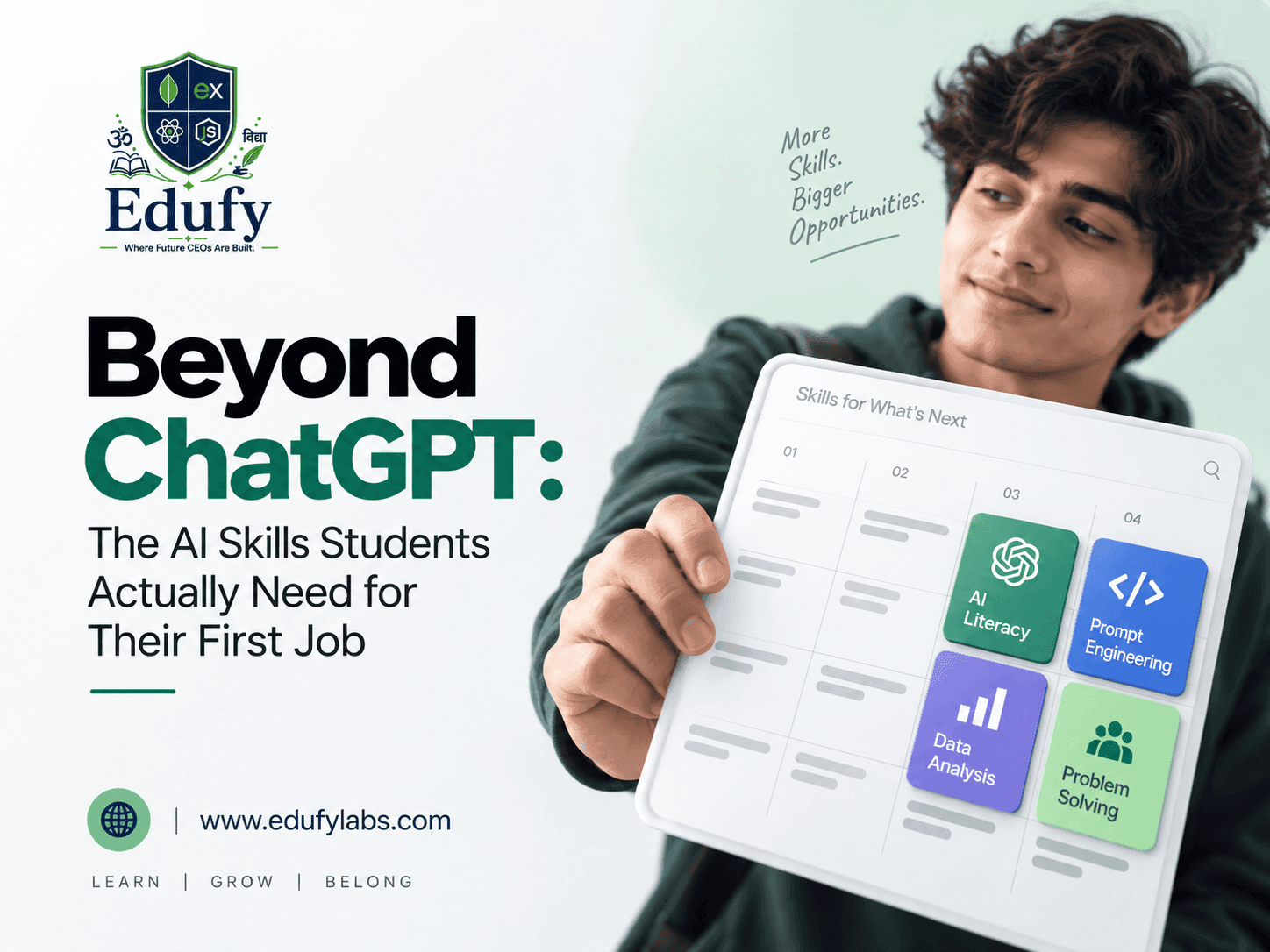
Ask most students what "AI skills" means, and you'll get the same answer: knowing how to write a good ChatGPT prompt. That's not wrong, exactly; it's just nowhere near enough anymore. Recruiters aren't impressed by prompt-writing the way they were even a year ago. What they're actually screening for is whether you can use AI tools inside a real workflow to build or ship something. That distinction is the whole point of this post.
If you're trying to figure out AI skills for students heading into their first job, or you're a parent wondering what AI skills before graduation actually means in practice, here's the honest version, not the recycled listicle version.
Why "I know how to use ChatGPT" doesn't move the needle anymore
A couple of years ago, just knowing generative AI existed was a differentiator. That window has closed. LinkedIn's Grad's Guide 2026, covered by People Matters, found entry-level hiring in India jumped 168% between 2023 and 2025, with AI Specialist and Generative AI Engineer among the fastest-growing roles for fresh graduates. But this is the part that matters:,that growth is in roles where candidates actually build with AI, not just chat with it.
In our own conversations with hiring-adjacent mentors at Edufy, the same theme comes up repeatedly: resumes that say "proficient in AI tools" get skimmed past. Resumes that link to a deployed project, something a recruiter can actually click and use, get a second look.
What "essential AI skills for college students" really looks like
Break it down by what employers are actually testing for, and it's less about AI in isolation and more about AI applied to a skill you already need:
For web developers, If you're asking about AI skills for web developer roles specifically, the honest answer is: AI-assisted coding tools (like Copilot-style autocomplete) are now assumed knowledge, not a bonus. What differentiates candidates is whether they can use those tools inside a full-stack build — frontend, backend, database, deployment, rather than just single-file scripts.
For anyone going the AI engineering route, the skills needed for AI engineer roles are more technical: Python, ML fundamentals, working with APIs and vector databases, and genuinely take longer to build. That's a different, longer path than what most Class 12 or early-college students should be starting with.
For a strong AI skills for resume line, what actually reads well isn't "AI skills" as a bullet point. It's a linked, working project description: "Built and deployed a full-stack app using AI-assisted development" tells a much clearer story than a skills tag ever will.
The edge case worth mentioning
Not every strong candidate is technical. AI Content Strategist and AI Business Analyst roles, for instance, are increasingly accessible without heavy coding, but they still require comfort working alongside AI tools inside a real business process, not just casual chat use. If you're not headed toward development, don't force it, but don't skip AI literacy either.
Where this actually gets built: real projects, not tutorials
This is exactly the gap our MERN Stack Mastery program is designed to close. Instead of scattered tutorials on MongoDB, Express, React, and Node.js, students build and deploy a real, production-hosted application, the kind of project that actually answers "what can you build" in an interview, not just "what do you know."
When we've run this with our own cohorts, the students who got the most out of it weren't necessarily the ones who started with the most coding background;,they were the ones who pushed through to an actual deployed product instead of stopping at "it works on my laptop."
If you're earlier in your decision process, our guide on Navigating Career Choices in the Age of Rapid Automation is a useful companion read.
Ready to build something real?
If you want AI-relevant skills that actually show up on a resume as a real, deployed project, not just a skills tag, Edufy's MERN Stack Mastery program is built exactly for that: live mentor-led classes, hands-on builds, and a portfolio piece you'll actually be proud of by the end.
Talk to a mentor and see if MERN Stack Mastery is right for you →
FAQs
What are the most important AI skills for the future?
Beyond prompting, it's the ability to integrate AI tools into a real build, coding, data work, or content workflows, rather than using AI as a standalone novelty.
Are AI courses for school students worth it before college?
Yes, if they're project-based. Early exposure to structured, hands-on tech learning gives school students a real head start over students who only start building in their final college year.
Is coding necessary for all AI-related careers?
No, but for technical AI or web development roles, it's close to non-negotiable. Business-facing AI roles (analyst, strategist) need less coding but more applied AI literacy.
Engineer's Day Special: Is Coding Still Worth It in the AI Era?
Engineer's Day is a good excuse to ask the question everyone's avoiding: does learning to code still matter when AI can write it for you? Sh
Read story
Is MERN Stack Still Worth Learning in 2026?
MongoDB, Express, React, and Node.js still power a huge share of full-stack and startup job postings in 2026. Here's an honest look at wheth
Read story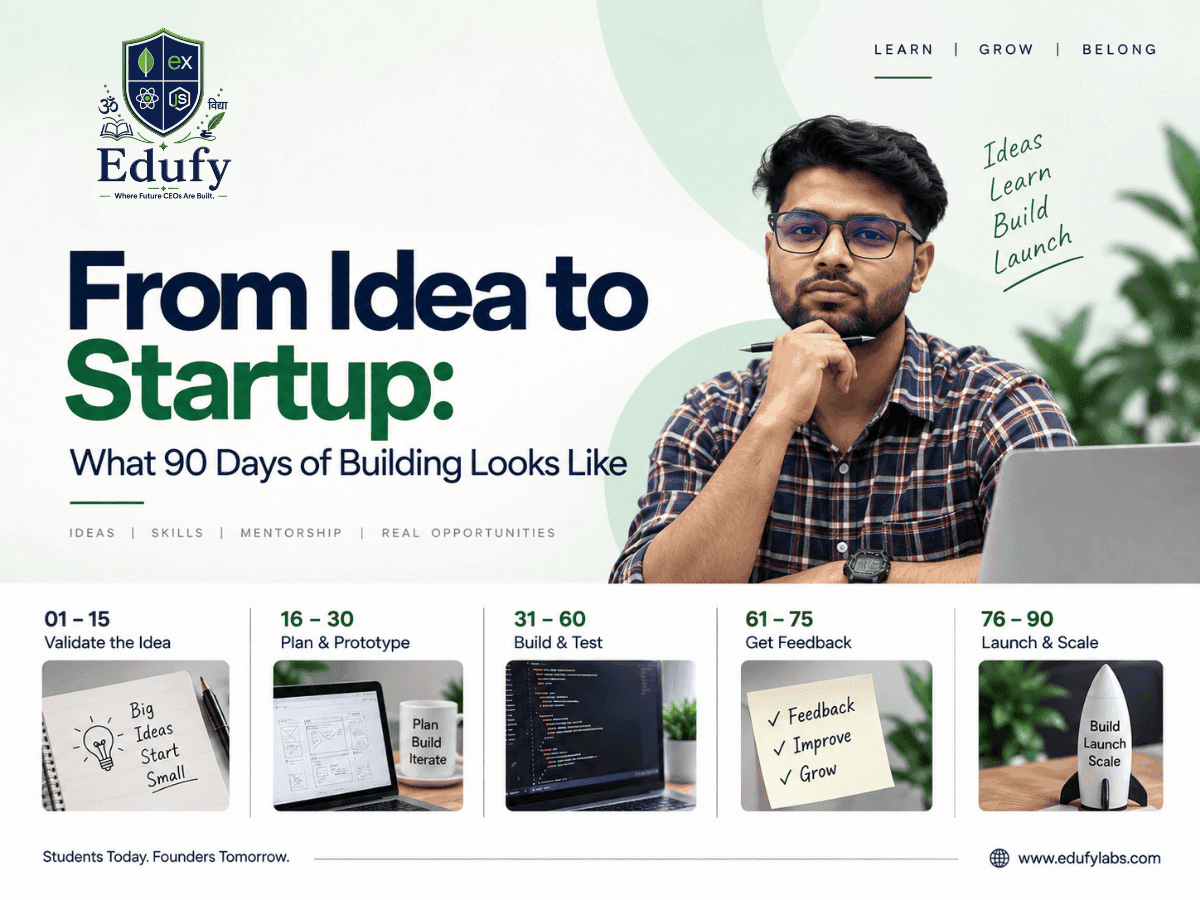
From Idea to Startup: What 90 Days of Building Looks Like
From Idea to Startup: What 90 Days of Building Looks Like
Read story