Engineer's Day Special: Is Coding Still Worth It in the AI Era?
Engineer's Day is a good excuse to ask the question everyone's avoiding: does learning to code still matter when AI can write it for you? Short answer — yes, but the "2019 version" of coding is dead, and MERN full-stack skills plus AI fluency are what actually get you hired in 2026.

Every 15th of September, the same thing happens. College timelines fill up with cake photos and "Happy Engineer's Day" captions, and somewhere in the comments, someone asks the question nobody wants to say out loud at the party: if AI can already write code, what's the point of learning to code?
It's a fair question. Genuinely. Not answering it with a pep talk.
So if you're in Class 12 trying to pick a stream, already a couple of years into a college degree and quietly wondering if you picked wrong, or a parent who's read one too many "AI replacing jobs" articles this month, stick around. We're going to actually work through this instead of dressing it up.
Why This Particular Engineer's Day Feels Different
Quick history bit, promise it's relevant. Engineer's Day marks M. Visvesvaraya's birthday, the engineer behind several dam and irrigation projects that, decades later, are still standing and still doing their job. Nobody remembers if he wrote elegant code. Nobody cares. What mattered was that the thing worked.
That's kind of the point here. Engineering was never really about typing syntax correctly. It was about solving a problem that was actually in front of you. What's changed is just how much of the typing part got automated. Ask an AI tool for a basic login page today, and it'll hand you one before you finish your chai. So sure, if your entire plan for a career was "I know how to write functions," that plan's got cracks in it now.
But knowing how to take a half-formed idea, build it into something real using code plus AI tools, and actually spot when the AI got it wrong? Nobody's automating that away anytime soon.
Alright, So, Is Coding Still Worth Learning?
Yes. Just not the 2019 version of "learn to code."
Here's the shift, in plain terms: companies aren't really hiring juniors to sit and write functions line by line anymore. AI chews through a lot of that already. What they're short on is people who can take a rough idea and turn it into something a user can open, click around in, and actually use — frontend wired to backend, backend talking to a database, the whole thing sitting live somewhere on the internet, not just on someone's laptop.
That's full-stack development. And for getting into it, MERN is still, honestly, the most practical door in.
Why MERN Stack Still Holds Up in 2026
MongoDB, Express, React, Node.js. Say it fast a few times, and you'll notice something: it's JavaScript, front to back. No switching languages halfway through your app.
A few reasons this still matters:
One language means one learning curve, not two. React handles the frontend, Node and Express handle the backend, and it's all the same syntax underneath, which cuts down a lot of the "wait, why does this language work differently" confusion beginners run into.
It's also just what a lot of young companies build with. Walk through the startup scene in Kolkata right now, and a decent chunk of the apps behind those pitch decks are running on some version of MERN — fast to build, cheap to host, and doesn't need a huge team to maintain.
And it plays well with AI tools instead of getting replaced by them. Once you actually understand how a MERN app fits together, something like Copilot stops feeling like magic and starts feeling like a fast typist sitting next to you, one you still need to double-check.
A MERN Roadmap That Isn't Trying to Overwhelm You
Skip those roadmap infographics with forty boxes and arrows pointing in six directions. This is roughly what matters, and in what order.
Start with HTML, CSS, and core JavaScript. Give it three to four weeks, at least. This is the part people rush, and it's also the part that comes back to bite them later.
Then React components, state, and how information actually moves across a screen without the page reloading every time.
After that, Node.js and Express, which is really just learning how a server listens to a request and sends something back.
MongoDB comes next: how data gets stored when you're not locked into rigid tables like a traditional SQL database.
Then you put it together. One small full-stack project. A to-do list, a simple booking form; it doesn't need to be original, it needs to exist.
Last step, and the one people skip: deploy it. Get it live on Vercel or AWS so it's not just sitting on your laptop collecting dust.
Realistically? Students who stay consistent get through all of this in three to five months, alongside school or college. Not a weekend. Whatever the ad copy somewhere is claiming.
What a MERN Stack Course Should Actually Give You
Here's something worth saying plainly: a good chunk of "full course" listings floating around online are just recorded lecture playlists. You watch, you nod, and by Thursday you've forgotten half of it.
What actually helps students stick with it and get somewhere:
Live sessions with a mentor you can interrupt mid-doubt, not a forum post that gets answered three days later when you've already moved on.
One real project instead of five disconnected exercises. Something you'd feel comfortable talking through in an interview, because you actually built it and hit the bugs yourself.
And deployment experience, so "it works on my machine" doesn't become the running joke of your project.
This is roughly the gap Edufy's MERN Stack Mastery program was built to close, starting from JavaScript basics and ending with a live, deployed application, with mentors who actually look at your code rather than just handing out a certificate at the end.
If You're in Kolkata or Nearby, What This Actually Means
If you're in Class 11 or 12, or already in college around Kolkata, none of this needs you to drop your degree plans. Most students run a MERN course alongside regular classes and treat it as proof of what they can build, not a replacement for the degree they're already working toward.
And for the parents reading over a shoulder right now, this isn't a "skip college, do a bootcamp instead" pitch. Think of it more as your kid finishing one real, working project before graduation even happens. That's a resume line that's genuinely hard to fake, and it tends to matter more in interviews than most people expect.
A Quick Gut-Check, Since It's Engineer's Day
No scoring system here, just three questions; answer them honestly, only you'll know if you're lying.
Does the process of poking at something broken until it finally works actually appeal to you, or does it just sound exhausting? Are you fine learning by building your own thing, messy as it'll be, instead of watching someone else code a perfect version on YouTube? And can you realistically put in a few steady hours a week for three or four months, on the boring weeks too, not just the ones where you're feeling inspired?
If two out of three land as a yes, that's plenty. Full-stack development is still very much worth your time in 2026. The Stack Overflow Developer Survey has kept ranking JavaScript and full-stack roles among the most in-demand skills worldwide, year after year, which says something about where this is all heading.
Ready to Build Something Real This Engineer's Day?
Reading roadmaps is the easy part. Shipping something real is what actually moves your resume forward, and, honestly, your own confidence too.
Talk to an Edufy mentor about the MERN Stack Mastery program →
FAQs
Is MERN stack still in demand in 2026?
Yes. It's still a go-to stack for startups and mid-sized product teams, fast to build with, and JavaScript the whole way through, which keeps hiring and onboarding simpler.
How long does it actually take to learn MERN stack?
Most beginners who stick with it land somewhere between three and five months to get a deployed full-stack project done, putting in a few hours a week around school or college.
Do I need a computer science degree to work as a MERN developer?
Not really. A degree helps with fundamentals, sure, but companies hiring junior full-stack developers tend to care more about what you've actually built than which stream you came from.
Is MERN better than MEAN for someone just starting?
For most beginners, yes. React has a bigger community and a lot more learning material floating around than Angular, so it tends to be the gentler starting point.
Can a Class 12 student realistically start learning MERN stack?
Yes, and plenty already do. A good number of students start during Class 12 or right after, and end up with a working project before college placements are even on the calendar.
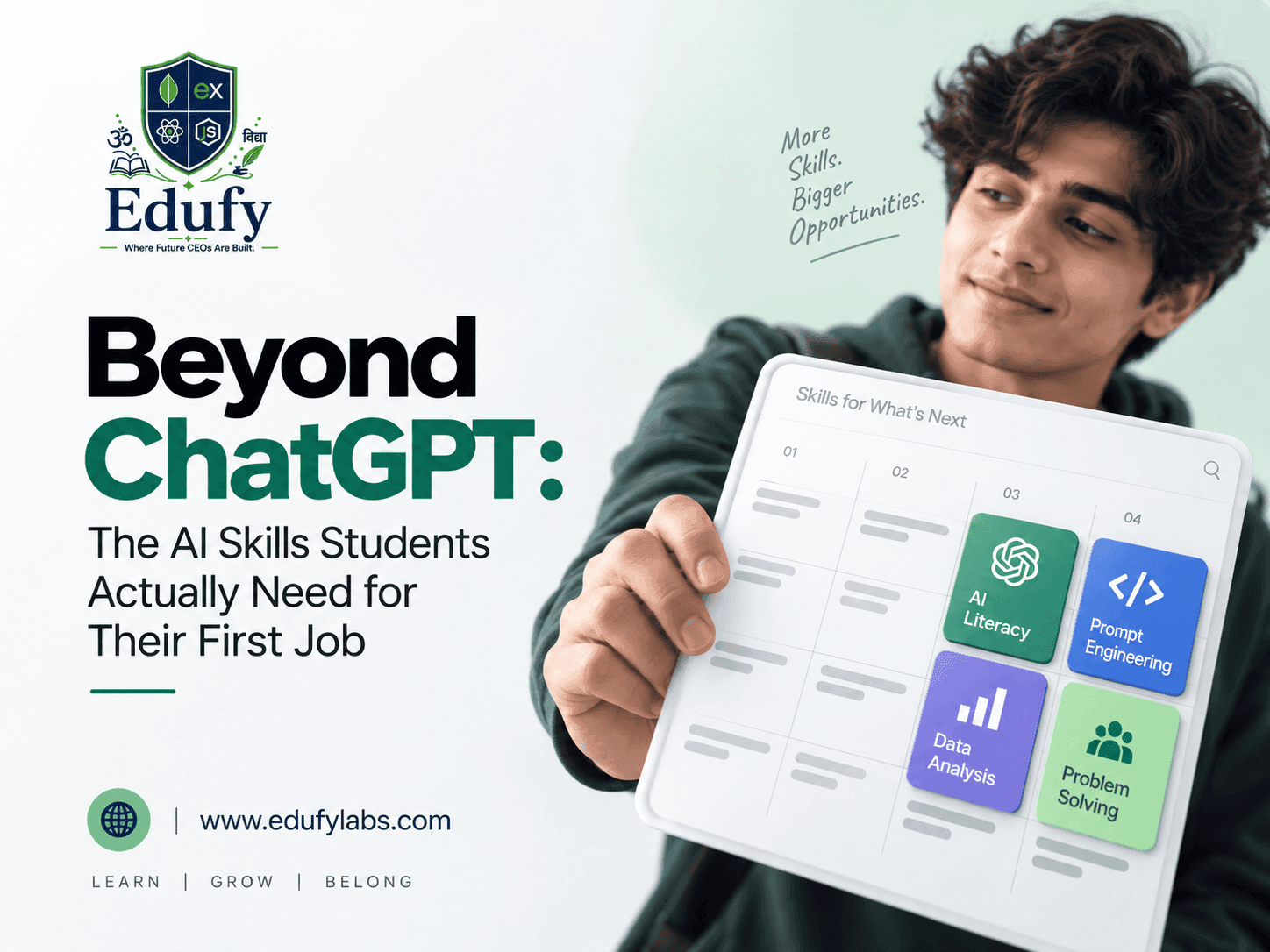
Beyond ChatGPT: The AI Skills Students Actually Need for Their First Job
Knowing how to prompt ChatGPT isn't the differentiator it used to be. This breaks down the actual AI skills recruiters screen for in 2026 —
Read story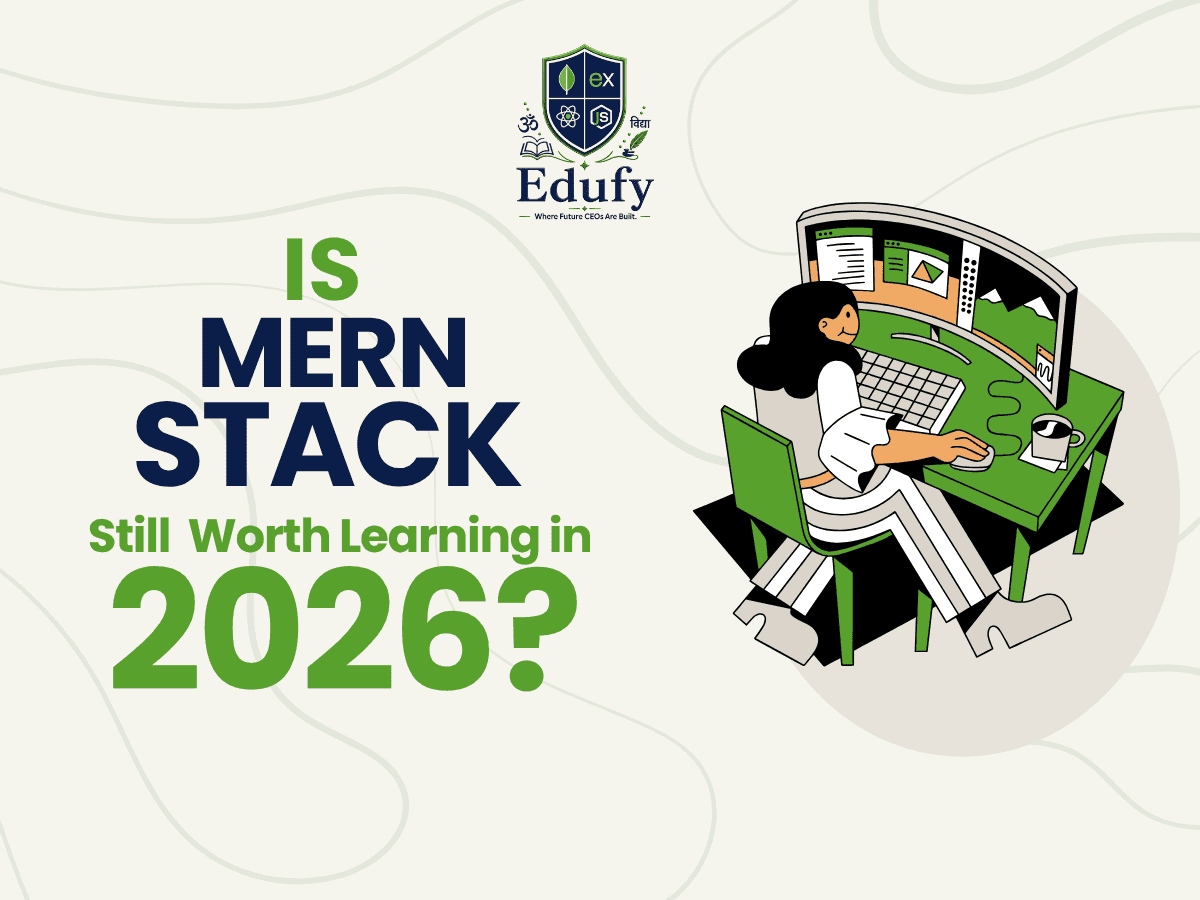
Is MERN Stack Still Worth Learning in 2026?
MongoDB, Express, React, and Node.js still power a huge share of full-stack and startup job postings in 2026. Here's an honest look at wheth
Read story
From Idea to Startup: What 90 Days of Building Looks Like
From Idea to Startup: What 90 Days of Building Looks Like
Read story